Session Notes
Opening Question
Given that the Tao which can be named is not the eternal Tao, and that Plotinus insists the One cannot be spoken without being diminished, what do we make of a text where God’s first creative act is to name things, where names are changed at pivotal moments, where every significant place and object receives a designation — and what does all that naming do to our sense of what ultimate reality is?
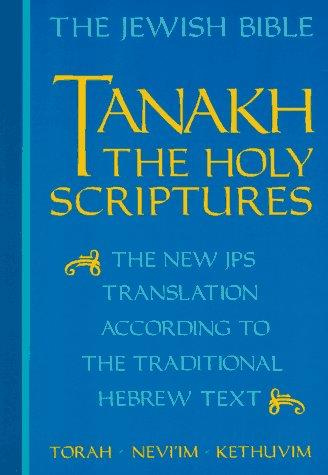
Having spent the previous sessions with Plotinus’s Enneads and the Tao Te Ching — two traditions that treat the ground of reality as fundamentally unspeakable, unnameable, and beyond predication — we arrived this session at a text that seems to operate in almost the opposite register: one saturated with names, genealogies, covenants marked by specific terms, and a God who names things basically as his first creative act. We opened by framing this tension as the central branch for our conversation. In Genesis, God separates the wet from the dry and immediately calls them water and land; Jacob’s name is changed to Israel at a pivotal moment; significant places receive names the moment something happens there; even administrative structures like the Tent of Meeting are designated precisely. All of this stands in sharp relief against the Tao Te Ching’s opening gambit — “the Tao that can be named is not the eternal Tao” — and against Plotinus’s persistent insistence that the One cannot be spoken without being diminished.
The conversation moved quickly from the abstract to the specific, and the first thing we noticed is that the God of Genesis and Exodus refuses, in his own way, to be fully named. We observed that in the Torah the divine name is never actually pronounced — the tetragrammaton is replaced with “Adonai”, meaning something like “my Lord,” and even God’s self-designation in Exodus, the phrase usually translated as “I AM WHO I AM,” is closer to a description of pure being-in-itself than a proper name. The epithet El Shaddai (lit. God Almighty), is a calling-toward rather than a labeling/naming. It was noted that the Hebrew naming convention itself is embedded in relation and origin — Isaac ben Abraham (Isaac son of Abraham), a person located within lineage rather than labeled in isolation. This led into a delightful digression in which everyone in the group explored the etymology and inheritance of their own names: Wes tracing Wesley to “the west meadow” and Trevor to “homestead,” Yessy describing her Chinese name Chi as a pun on the Cantonese word for flag — she was born on Canada Flag Day — with a character meaning angel or jade, and Alexa noting her name is a shortened form of Alexandra, “defender of mankind”. What had begun as a philosophical question about naming as an instrument of dominion gradually revealed itself as a question about how names can be acts of recognition rather than imposition, reflections of nature rather than assertions of will. For example, Isaac means “He laughs” which refers to the joy and disbelief expressed by Abraham and Sarah when told they would have a child in their old age.
From naming we moved to the character of this God himself, and here the conversation became considerably more complex. The God of Genesis and Exodus is emphatically a moral God, one who judges and tests and punishes. We spoke a bit about how He seems to have emotions and is often wrathful. God’s relationship with his creation and his own feelings also seems a bit wiley. We discussed the complex implications of God regretting making mankind. Exploration of these notions constitutes what may be the most dramatic difference from the traditions we’d been reading previously. In the Tao Te Ching there is no moral judgment about what a person is; things simply are, and the Tao moves through them without preference. In Plotinus, ethics emerges from the soul’s orientation toward the One, but the One itself is beyond the categories of good and evil. Here, by contrast, man is conceived from early on as carrying an inclination toward deceit and transgression, and God — remarkably — seems to be working this out in real time. We entertained a reading of the plagues that God brought upon Egypt as a demonstration: God hardening Pharaoh’s heart isn’t arbitrariness but a kind of escalating proof of his supremacy, each plague targeting one domain of Egyptian divine authority — Ra’s sun, the fertility of the Nile, the firstborn who embodied the Pharaoh-as-god — until the claim of a singular, universal God is established beyond dispute. We found it hard to dismiss the synchronicities therein. We also kept returning to how strange it is that this God gives his people free will and then spends what amounts to centuries watching them misuse it before articulating the Ten Commandments. The commandments only come after the encounter on the mountain — what Wes called “Time Travel Mountain” — as though God needed exposure to the full arc of human behavior before he could legislate it. This is kind of a parallel to our reading of Plotinus: studying one thing deeply enough that you reach through it to the universal, and God’s testing of Abraham, of Israel, of the people in the desert as a kind of intensive, often brutal study of what humans actually do under pressure.
We spent considerable time with the specific moral texture of the text — its many scenes that resist easy judgment. We flagged Abraham pawning Sarah off as his sister not once but three times, each time being called out by the host culture’s leaders (“dude, what the fuck, it’s your wife”), and we followed this thread forward to where it hardens into the commandment against coveting another man’s wife: a rule that seems to emerge from accumulated narrative experience rather than from above. The question of what this text actually condemns, and what it passes over in silence, generated some of our liveliest exchange. The story of Dinah (who was raped by Shechem, whose attempt at reconciliation through mass circumcision is met with massacre once the men are incapacitated from their post-circumcision pains) sits without explicit moral verdict. The daughters of Lot intoxicating their father so they can lay with him to produce children to continue their lineage is narrated without condemnation; the text seems most interested in the assurance of procreation. Even the laws can be understood as a cultural binding that is focused primarily on promulgation and survival. For example, not eating unclean animals isn’t a moral judgement, it is a function of survival, just like the mandate to wash your hands. Even the rules around circumcision have scientific grounding in disease transmission. Someone noted that Jewish people died at roughly half the rate of the general population during the bubonic plague, presumably because of hygiene practices encoded in their law. Who is to say if this is divine providence or functional epidemiology, and perhaps both.
We also explored the story of Cain and Abel, and tried to make sense of it. Cain’s offering of crops being rejected where Abel’s blood sacrifice is accepted colors an agrarian-versus-nomad narrative that runs through the rest of Genesis: Cain the farmer goes on to found the first city, while Abel the herdsman is aligned with a kind of harmonious movement with nature that seems to please this God.
Two threads drew us toward our close, both circling back to where we began. One was the Tower of Babel, which we kept returning to with real unease: the people have achieved unity of language and purpose, and God disrupts it, apparently because they were getting too close too fast. We read this as the dark mirror of the Fall — not disobedience this time, but premature arrival. We explored the expulsion from Eden as an allegory for puberty, the moment when the child becomes aware of its separateness from the whole, when the unity of “being one with God” breaks into the duality of self-and-other, good-and-evil, nakedness-and-shame. The Tower of Babel then becomes the moment humanity tries to reverse that fall through their own collective effort, and God intervenes because… well, we didn’t really understand why, to be perfectly frank. The other thread was the question of faith. We discussed the moment when Moses tells his people that God is just testing them: does naming the test dissolve it? We found ourselves defending the psychological utility of that frame, the way framing hardship as a test provides something to endure toward, a reason not to simply collapse. At the close, we had, perhaps unexpectedly, found significant overlap between this most relational and personified of gods and the nameless absolutes of our previous readings: that there is something in the dynamic of Moses arguing God back from the edge of his own wrath — actually changing God’s mind — that resembles the Plotinian soul in conversation with the One, or the Taoist practitioner consulting the voice of their innermost nature. The morality is radically different, but the structure of the relationship, looked at sideways, kind of rhymes.