Session Notes
Opening Question
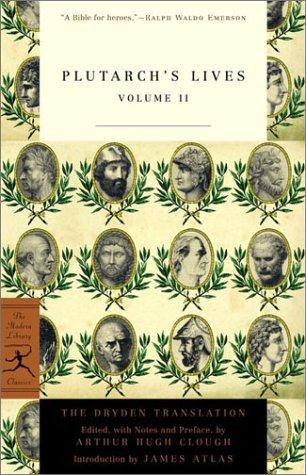
This moment in Roman history — the transition from Republic to Empire — looks like a lived-out version of Plato’s assertion that all democracy degrades into tyranny through the corruption of souls. This is strikingly reminiscent of our previous discussion around the evolution of the Jewish Bible’s God’s relationship to man: his vain struggles and attempts to get mankind to remain loyal to him. In Rome, Plutarch notes that there were numerous portents, dreams, ill-fated sacrifices, signs everywhere trying to prevent their backslide. Yet Rome, like God’s own people in the Old Testament, was ineffective in stopping it. What is it about authority that renders it unable to manufacture the loyalty it requires to survive?
Picking up from our readings of the Old Testament and moving now into the historical lives of Rome, we arrived at this session with a question about power and its fundamental instability. The parallel we’d been tracking between God struggling to maintain the devotion of his chosen people and the Roman Republic struggling to maintain its governing structure felt almost too resonant to ignore. An opening historical recap oriented us: Rome was founded by patricide (regicide?) against monarchy, declared itself a Republic, sustained that Republic for roughly four hundred years, and then watched Caesar rise to such overwhelming popular power that the Senate conspired to murder him. The conspirators successfully dodged a civil war, but ultimately failed to prevent tyranny. Instead they arguably accelerated it, and within a generation Octavian, Caesar’s nephew, became the first true emperor. The question we kept returning to throughout the evening is whether this outcome was inevitable, whether any of the actors involved, specifically Caesar, Brutus, or Antony, could have chosen differently, and what the collapse of Republican Rome teaches us about the nature of sovereign authority itself.
One of the first threads we pulled was the question of populism as a potentially new force in the political toolkit. The group observed that Caesar’s rise wasn’t primarily a military coup or a legislative power grab, rather it had a lot to do with a popularity phenomenon. He won wars, he spoke beautifully, he looked the part (he was hot and had a nice nose), he demonstrated clemency when harshness was expected, and he hosted gladiatorial games on debt to keep the people entertained. The Senate, which had evolved as a system for delegating decision-making to trusted representatives, hadn’t yet developed an immune response to someone who could bypass them entirely by winning the direct favor of “the people” as an amorphous mass. We noted that the text repeatedly refers to “the people” as a singular tool wielded by powerful men, like a herd to be swayed, and wondered whether this conception of a collective public will was uniquely Roman or whether it’s simply what happens when empires grow large enough to absorb vast cultural diversity. The bread-and-circuses strategy became a touchstone: when control starts slipping, “lower the price of eggs”, throw more games, give them something immediate and tangible to feel good about. The contemporary parallels were impossible to miss, and we kept circling back to them, sometimes with levity, sometimes with genuine unease.
The question of whether the conspirators made the right choice in killing Caesar generated some debate. On one hand, Caesar’s accumulation of power genuinely threatened the Republic, and the Senate’s fear that he would declare himself king wasn’t just the paranoia of the Senate, it was a live possibility grounded in centuries of cultural memory about what monarchy means and how hard it is to undo. On the other hand, as one participant noted, would you rather have a good king or a mediocre Senate? And was Caesar actually planning to subjugate Rome, or did the momentum simply start carrying him toward absolute power once he’d amassed enough popular favor? We wrestled with the fact that the conspirators’ plan was meticulous for the assassination itself but almost nonexistent for what came after. They enlisted Antony to smooth things over, and the Roman people were actually willing to accept Caesar’s death, that is, until Antony gave his eulogy speech, revealed Caesar’s will, showed the stab wounds, and turned the crowd. The question then became: was this outcome inevitable regardless of their choice, or did the conspiracy accelerate the very tyranny it sought to prevent?
Brutus emerged as the philosophical anchor of the conversation. We kept returning to him as the one character who genuinely seems to have acted on principle rather than ambition. He sided with Pompey over Caesar despite personal affection for Caesar, because Pompey represented the Senate’s interests. He preserved Antony’s life when killing him would have been strategically sound, because his principles forbade unnecessary bloodshed. He chose the Republic over personal gain at every turn, and it destroyed him. The group found this both tragic and admirable, and we pressed on what it means to act on principle when outcomes are unknowable. One participant reflected that principles are “quiet”. That is, they don’t generate excitement or popular momentum in and of themselves, and they only become visible when someone is tested against them. Another observed that this makes Brutus’s legacy all the more striking: he went down in history precisely because his principles were legible under pretty constant and evolving pressures. We wondered whether this connects back to the Old Testament framework of testing. Are God’s tests of Abraham and Moses and Job fundamentally about making invisible interior commitments become visible through crisis?
The final arc of the conversation moved toward synthesis between the mythological sovereignty of God and the lived political sovereignty of Rome. We asked whether the Old Testament God’s arc (from wrathful tyrant to compassionate god who inscribes the covenant on hearts) might be playing out in parallel with Rome’s struggle to find a sustainable form of authority. The observation was made that both systems are wrestling with the same fundamental problem: how does power sustain itself when the loyalty it requires can never be fully manufactured?
The group landed on a reading of power as inherently unstable. It isn’t just difficult to maintain but it is perhaps structurally prone to collapse over and over again. This brought us to a passage in the Tao: “if you want something to disappear, let it flourish”. We talked about the “allergic” reaction that systems seem to have when any individual rises too far too fast. We discussed the line “subservience is never without its double threat: what if I no longer?” The recognition that every act of submission contains within it the seed of revolt. One participant brought up the five good emperors and Cincinnatus as counterexamples, moments when philosopher-kings actually worked, and urged us not to be overly pessimistic about the destruction of the Roman Senate. Although the prevailing sense was that power, left unchecked, tends toward concentration – and concentration tends toward instability, and instability tends toward violence.
The conversation closed with reflections on whether the right response to rising authoritarianism is intervention (the conspirators’ choice) or faith in the people’s own capacity for an allergic reaction (the Taoist approach). No firm conclusions were reached, but the question itself felt urgent.