Session Notes
Opening Question
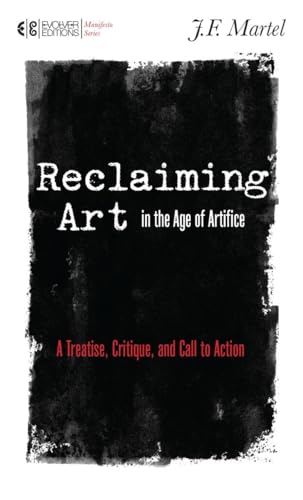
Where does the human start and the muse stop? Martel describes the muse as this stranger; a sublimated layer that exists somehow beyond the author or creator. Yet near the end of the book, he frames salvation from overwhelming artifice in the world as depending on real humanity in the art-making process. What is the nature of the relationship between humanity, what is human, and what is muse? How can this thing so often described as almost alien and abstracted from the individual be framed as the seed of humanity? He even claims, quite boldly, that humanity wouldn’t exist without art, which is inherently a product of a relationship with this thing that doesn’t seem to be solely human.
We opened with the reminder of the collaborative nature of dialogue, that we’re here to try on these authors’ worldviews rather than solve all problems, and that the opening question is a departure point rather than a problem to be fixed. The first response challenged Martel directly: there seems to be a contradiction between his claim that art arises from interaction with the world based on effects stripped of conceptualized social meaning (symbol territory) and his use of the muse as a vehicle for explaining that experience. By naming the muse as something outside human nature, isn’t he re-imputing the very division between humans and nature, creation and source, that he’s been critiquing? They added that Martel resonates in an almost ephemeral way, but the mode by which he arrives at his conclusions sometimes contradicts other things he says. Is the book itself enacting artistic expression rather than philosophy, asking us to leap the chasm rather than understand it rationally?
The conversation moved toward locating the muse, and we landed on culture as the key variable. We noted that Martel quotes a passage about how the artistic experience depends not on subjective mood but on an individually acquired, hence variable, power to be affected by art, a capacity developed through one’s culture in tandem with one’s unique character. Different cultures place the muse in different locations: psychology places it inside as intuition and the unconscious, Celtic tradition places it outside in nature as fairies, Christianity places it in the divine or heavens. Martel’s problem with capitalist society is that it cuts off the relationship to the muse entirely. So rather than prescribing one answer, he’s giving us several avenues from which we can reinstate the muse in our lives. We’re responsible for creating or participating in a culture that reestablishes our relationship to it. This reframing helped dissolve the original question: it’s not about where the muse is objectively, but about what cultural myth you’re operating within. The group started thinking of the muse more as a relationship to the unknowable, or as one participant refined it, an unbounded unknown that we encounter and that draws us to know it more. The surface of that encounter is the “numinous”; the muse is behind that encounter, and we’re trying to break through to what’s really there, which just keeps being unbounded.
We spent time exploring the symbol versus sign distinction, and the technological aesthetic of reproduction and artifice. One participant brought up Chauvet Cave art as an example of what Martellian art might look like: anatomically detailed, capturing both chaos and order of nature, showing movement in a realistic representational way. If these are the first representations people are making, it suggests something profound about the human relationship to the unknown from the very beginning. The conversation turned to what counts as real art versus ideological conformist reproductions. Someone raised the question of whether album covers are Martellian art or artifacts of the culture industry, and we wrestled with how to distinguish between art that emerges from encounter with the rift and art that’s been flattened into propaganda or advertisement. The technological dimension became important: we talked about how the sheer volume of data that now persists (music from 100 years ago that didn’t used to stick around) causes society to calcify. The convention of categorizing everything and storing it creates endless hierarchies of objects and attributes, and trains us to put everything into single categories rather than allowing for circular connections and feedback cycles. This felt like a departure from how human brains naturally work, and we wondered if the past accepted human contradiction more readily than we do now, where coherence has become a rigid political demand.
The question of whether animals have access to the muse or imagination came up, and we attempted to circle it carefully. Some felt that pointing to human uniqueness (animals have never written a play, never made a statue of David) is a circular justification, a kind of anthropocentric circle jerk that exalts human works as inherently superior. The counterpoint was that we don’t need to compare ourselves to animals to justify why our experiences of beauty and awe matter to us. Art is something humans experience, and because we experience it and it moves us, it matters. That can be enough. The real question isn’t whether humans are special compared to other creatures, but as a self-reflective species considering itself, do we want to be one that has the cultural foundations and capacity to engage with real art, or are we just going to exist in a matrix of advertisements? That’s what’s at stake. One participant suggested that building aesthetic and generative channels of understanding between humans and non-humans, allowing that to expand our ethical window, might be one of the tools that helps us survive as a world in mutual benefit and provision.
The final stretch turned explicitly political and practical: how do we protect ourselves from becoming a culture existing exclusively in a matrix of advertisements and pornography and propaganda, and how do we keep alive the part of us that creates and engages in real art? We talked about the tying together of aesthetics and ethics, the importance of encountering art in non-commodified spaces. We discussed the horrifying reality of blood plasma donation centers where people sell their insides to afford groceries, the rendering of human beings into dollar signs, and the need to feed into a culture that values people for more than what they can be extracted into. Someone quoted Byung-Chul Han: “The appeal to be free produces a compulsion which is far more devastating than the injunction to be obedient.” The Matrix, it turns out, is opt-in, freemium. One participant wrestled with a friend’s genuine sentiment that being subsumed into the Borg might be kind of nice, not having to worry about anything, and wondered if we should resist or accept what might be the inevitable future. We kind of all agreed that we’re already doing the work of resistance by being here, by creating spaces for genuine dialogue and mutual exploration, by choosing to engage with real art rather than letting artifice flatten our capacity for encounter. Then we told each other how amazing we are and kissed. The end!