Session Notes
Opening Question
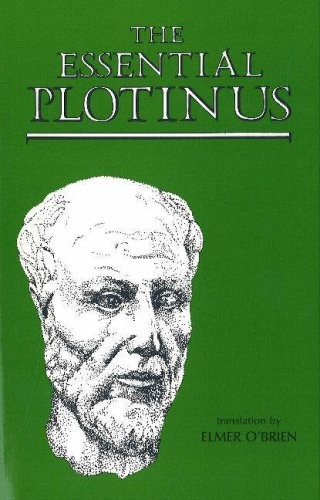
C an we map out Plotinus’s metaphysical realm in a way that feels intelligible, to the point where we can talk about what the real contemplation looks like in practice? The goal was to determine the validity of two key claims Plotinus makes: first, do all things lead to and originate from Unity? And second, what is the one? We would approach these questions by examining what contemplation actually is, since contemplation is everything according to Plotinus (whaaa?). this immediately raised a problem: contemplation precedes action, yet contemplation is also the end of action. How do you meaningfully delineate between thought and action in this schema if contemplation is both the origin and the end of everything?
We arrived at the understanding that contemplation is an act of assimilating what you contemplate into your own being, with all actions and desires ultimately aimed at producing forms that become new objects of contemplation. When you contemplate a tree and ask what makes it a tree, you enter the intelligible realm of forms – our access to understanding anything is through this realm, which feels very Platonic but also sets up Plotinus’s major departure from Plato.
The heart of our discussion focused on Plotinus’s break from Plato regarding the forms and the problem of duality. While Plato positioned forms as the gods, the highest reality, Plotinus argues they’re imperfect because they exist in multiplicity – an individual thing is only individual because it’s not another thing, making it inherently flawed. Thinking itself is imperfect because it requires duality (thinker and thought), and nothing is perfect unless it’s self-same. This paradox leads to the notion of The One – a spring with no source, all things and no things simultaneously, unintelligible but somehow knowable. We agreed that we all inherently believe such a thing exists, but struggled alongside Plotinus in defining it in a concise and meaningful way. We all agreed that an inward sort of “knowing” (I.e. contemplation) was paramount to sensing any aspect of The One for oneself.
Given that the self is such a big part of the foundation of these claims, parallels to psychology seemed unavoidable to our modern minds. We discussed for a bit about how The One as irrational gives rise to rational Intelligence mirrors how the unconscious (an inaccessible field) gives rise to consciousness and language.
We concluded with the passage about the forgetful soul – how the good soul takes flight from multiplicity, reduces the multiple to one, and doesn’t carry earthly memories into the intelligible realm. This isn’t amnesia but recognizing your life as one of billions of hues in a spectrum, focusing on the presence of the field rather than your particularity within it. To contemplate, you must become. Memory matters insofar as it contributes to ego, and transcendence means letting that go.
We appreciated how accessible Plotinus is compared to philosophers like Kant, noting that unlike most classical philosophy, he offers up a distinguishable part of himself in articulating this experience (kinda similar to Epictetus in this regard). The connections to Buddhism, Christianity, and Eastern thought throughout the text felt strangely obvious, with the text having a quality where you can just let it wash over you and connect to source vs trying to build a robust mathematical logical system on top of it. Plotinus takes an Aristotelian approach to the Platonic idea of Forms and ultimately transcends both of his predecessors in provoking mystical ways.